
For Healthcare Professionals
Thyroid MWA: from physics to clinical advantage
Microwave ablation (MWA) heats tissue differently from radiofrequency ablation (RFA). Published thyroid studies report substantial nodule reduction and, in selected comparisons, shorter ablation times with MWA.
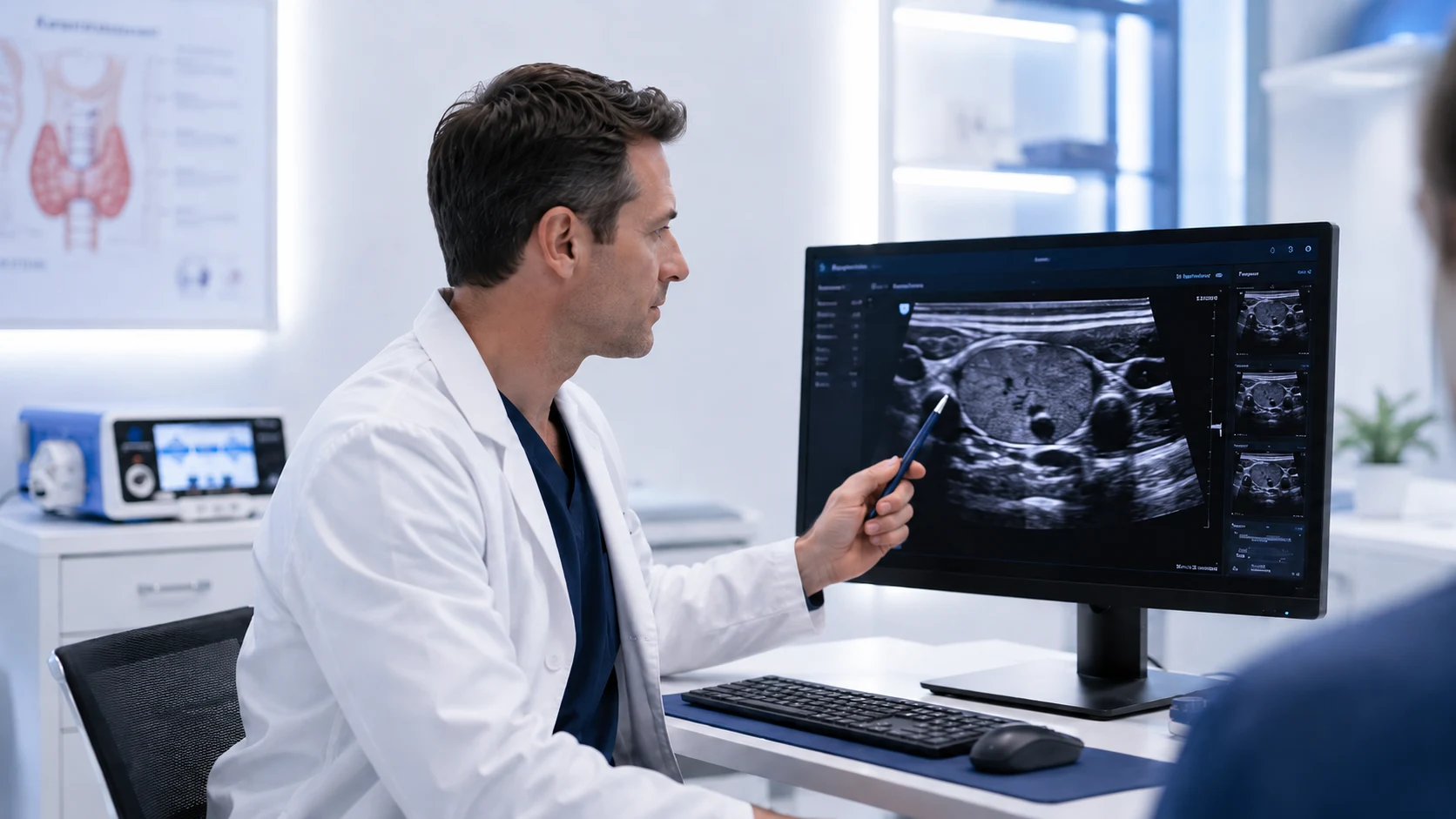
Thyroid MWA Mechanism
MWA heats tissue through an electromagnetic field,
not an RF current path
An oscillating electromagnetic field causes water molecules in tissue to continuously realign, generating heat around the needle. This mechanism has practical implications for tissue heating, energy delivery, and procedure setup.1,2
Volumetric microwave heating
Microwave energy radiates from the needle tip to heat a targeted tissue volume, rather than relying primarily on conductive heat spread from an electrode.1,2
Less affected by tissue impedance
Compared with RFA, MWA is less affected by rising tissue impedance during heating. It is also less susceptible to heat-sink effects from blood flow.1,2,6
No grounding pad required
MWA does not require a patient-return electrode, eliminating the grounding-pad placement step used in monopolar RFA.2,6
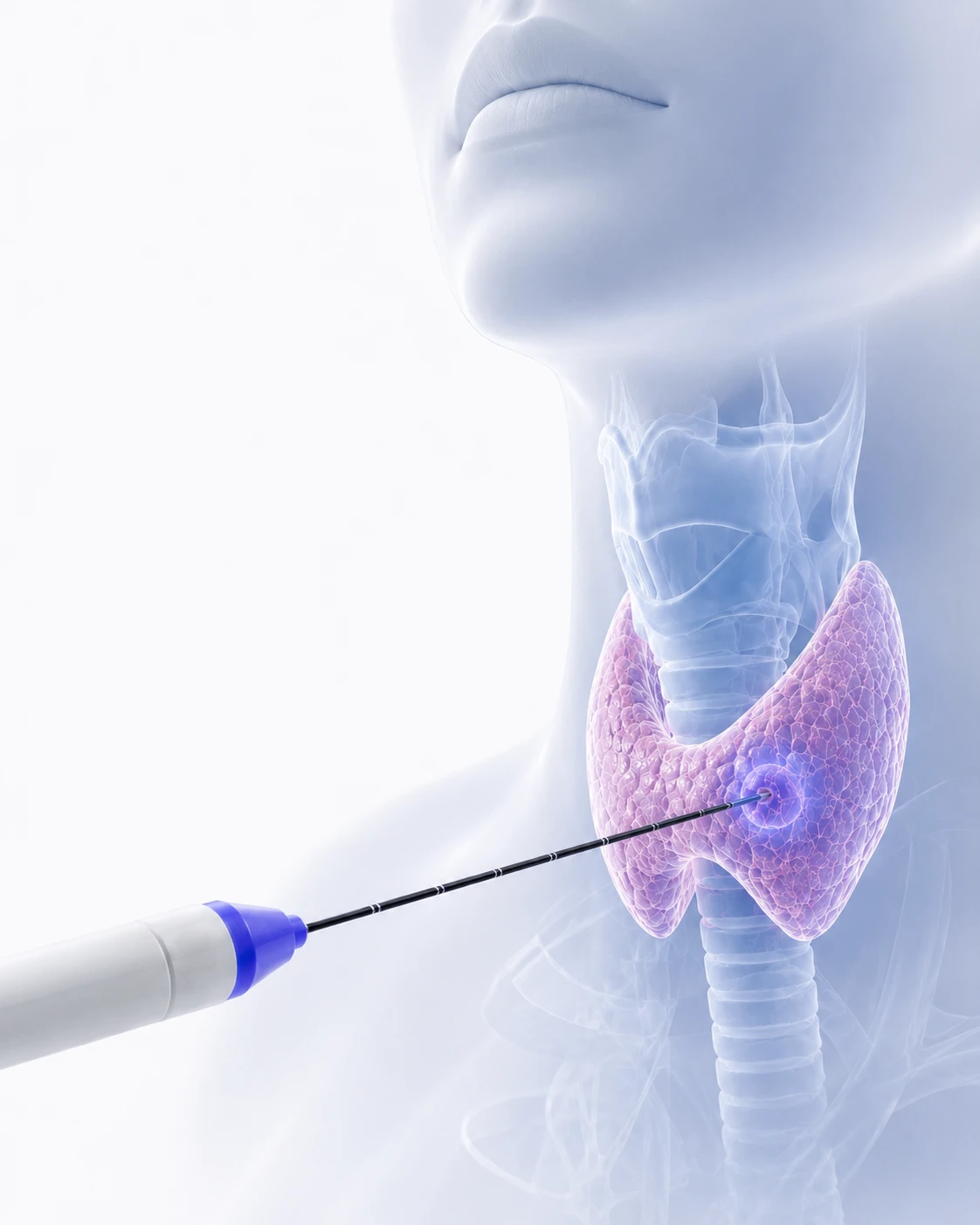
Clinical Advantages
Thyroid MWA offers distinct
clinical advantages
Substantial nodule reduction
Published thyroid studies report substantial nodule volume reduction after MWA, including at 12 months.3,4
Advantage in larger nodules
In an exploratory matched subgroup of nodules ≥3.5 cm (18 per group), MWA achieved a higher 12-month volume reduction rate (VRR) than RFA; overall matched results were comparable.5
Faster ablation
Matched data showed shorter total ablation time and ablation time per unit volume with MWA than RFA.5
Favorable safety profile
Published thyroid MWA studies report low rates of major complications.3,4
Outcomes vary by study, device, and patient population.
Clinical Evidence Snapshot
Published studies show meaningful thyroid MWA outcomes

- 3
- Mean 12-month volume reduction rate
- 5
- Median ablation time vs RFA
- 3
- Major complications reported in Zhao et al.’s cohort
Large benign nodules ≥4 cm
Matched cohort, n=66 per group
12-month follow-up; overall complications: 1.95%.
Treatment Positioning
Thyroid MWA addresses key RFA limitations while offering a thyroid-preserving alternative to surgery
Microwave ablation
Uses microwave energy to heat targeted tissue without surgically removing the thyroid gland. No grounding pad is required.2,6
Radiofrequency ablation
Uses electrical current to heat tissue. Rising impedance can limit energy delivery, and monopolar RFA requires a grounding pad.1,2,6
Surgery
Removes part or all of the thyroid, typically under general anesthesia. Thyroid hormone replacement may be needed depending on how much is removed.
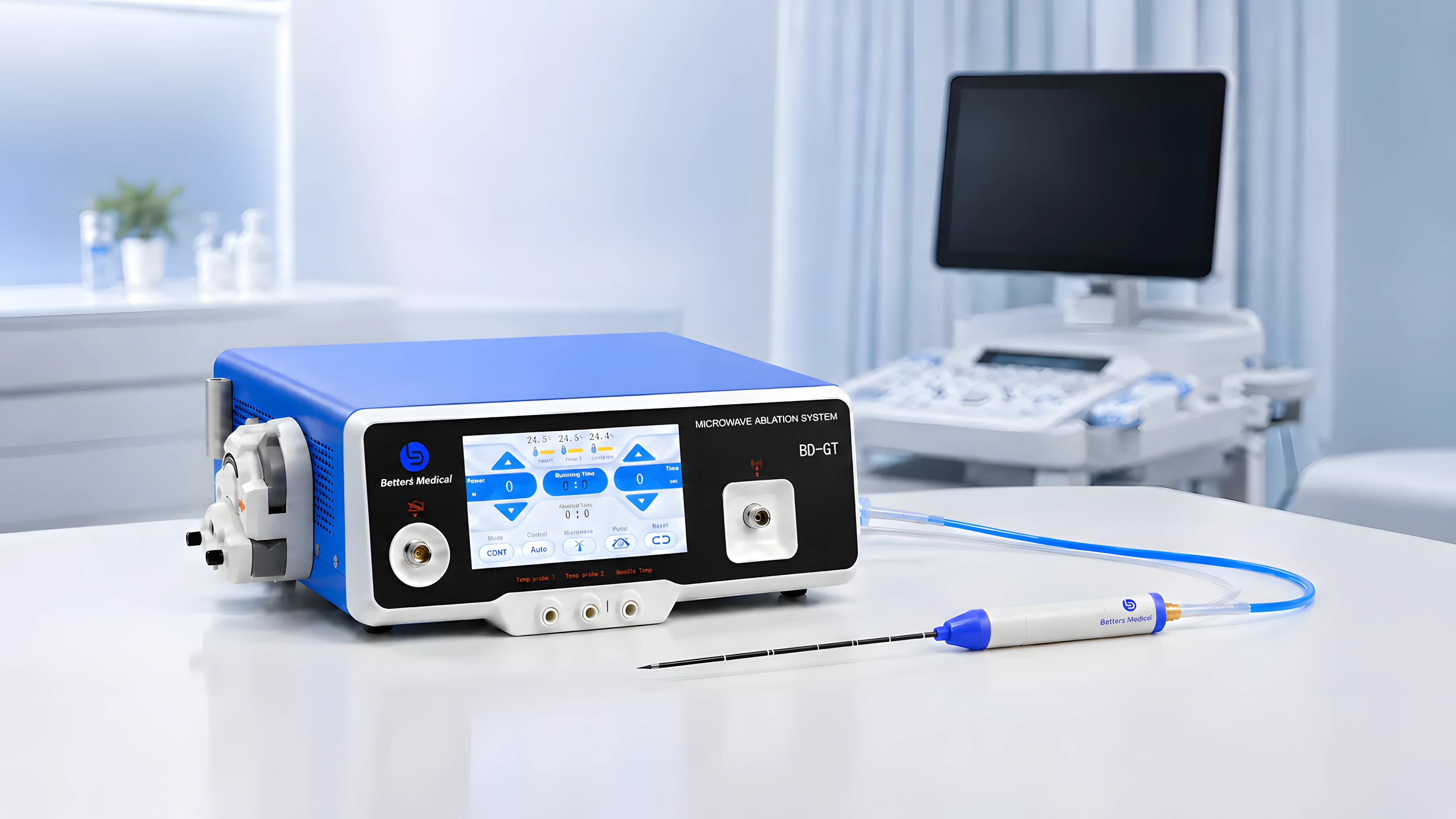
Baird MWA system
Explore the Baird MWA system
See the generator, ablation needle, and key features for physician-directed thyroid ablation.
Explore the systemReady to bring thyroid MWA to your practice?
Indications & Safety
Rx only. The Microwave Ablation System (BD-GT) and the Disposable Microwave Ablation Needle are indicated for coagulation (ablation) of soft tissue. Not intended for cardiac use. The needle is sterile and single use only. Contraindicated in patients with massive bleeding tendency; not recommended for pregnant women; use caution in patients with severe coagulation dysfunction. Potential risks and complications include pain, bleeding or hematoma, swelling, thyroid-function changes, voice changes, and injury to nearby structures. Refer to the Safety Information and the Instructions for Use.
FDA 510(k) K232240 · K232241 · Class II
Clinical Evidence Note
The clinical findings cited here come from published thyroid MWA studies using devices from other manufacturers. Baird Engineering has assessed technical comparability with the Betters platform to support evaluation of the literature's applicability.