
For Healthcare Professionals
Build a more efficient thyroid MWA workflow
Thyroid microwave ablation (MWA) offers an ultrasound-guided pathway for selected benign nodules. In a matched study, median ablation time was 46% shorter with MWA than RFA.

Why consider thyroid MWA workflow adoption
Selected benign nodules
Workflow planning starts with benign confirmation, imaging review, nodule profile, and physician judgment.
46% shorter1
Median ablation time vs RFA
¹ Fung et al.; matched cohort, n=66 per group. Outcomes vary by study, device, and patient population.
Workflow Readiness Map
A clear clinical workflow enables efficient thyroid MWA
Evaluate
- Benign confirmation
- Symptoms and nodule profile
- Treatment goals and alternatives
Prepare
- Room, equipment, and sterile setup
- Local anesthesia and monitoring plan
- Staffing and workflow roles
Ablate
- Real-time ultrasound guidance
- Needle placement and ablation planning
- Physician-directed energy delivery
Follow-up
- Post-procedure monitoring and discharge
- Procedure documentation and patient instructions
- Imaging and symptom follow-up
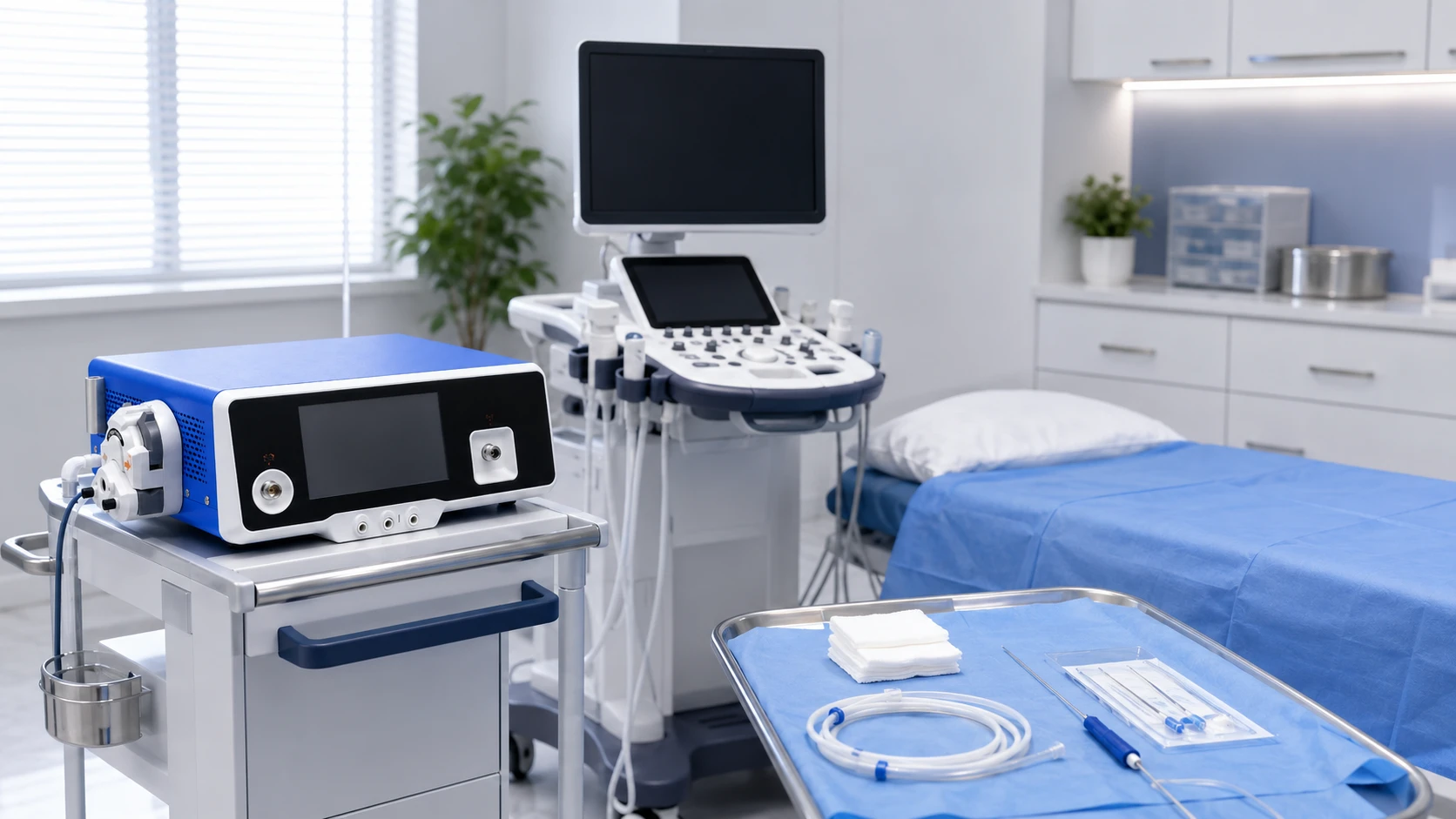
Room Readiness
A focused room setup supports efficient thyroid MWA adoption
MWA is built around ultrasound-guided, physician-directed treatment workflows for selected benign thyroid nodules, supported by a focused room-readiness plan across ultrasound guidance, MWA generator, MWA needle, and sterile supplies.
Next Step
Assess thyroid MWA workflow fit with Baird Medical
Review clinical fit, room readiness, team roles, and implementation questions in one focused discussion.
Discussion can cover
- 01
Fung MHM, et al. Eur Radiol. 2026;36(3):1783–1796.
- 02
Sinclair CF, et al. Thyroid. 2023;33(10):1150–1170.
Indications & Safety
Rx only. The Microwave Ablation System (BD-GT) and the Disposable Microwave Ablation Needle are indicated for coagulation (ablation) of soft tissue. Not intended for cardiac use. The needle is sterile and single use only. Contraindicated in patients with massive bleeding tendency; not recommended for pregnant women; use caution in patients with severe coagulation dysfunction. Potential risks and complications include pain, bleeding or hematoma, swelling, thyroid-function changes, voice changes, and injury to nearby structures. Refer to the Safety Information and the Instructions for Use.
FDA 510(k) K232240 · K232241 · Class II
Clinical and regulatory note
This content is intended for healthcare professionals and is for educational purposes only. It does not replace physician judgment, approved labeling, applicable instructions for use, institutional credentialing, or clinical policies.