
Microwave ablation
(MWA) offers meaningful
benefits for selected
benign thyroid nodules
MWA treats selected thyroid
nodules without open surgery
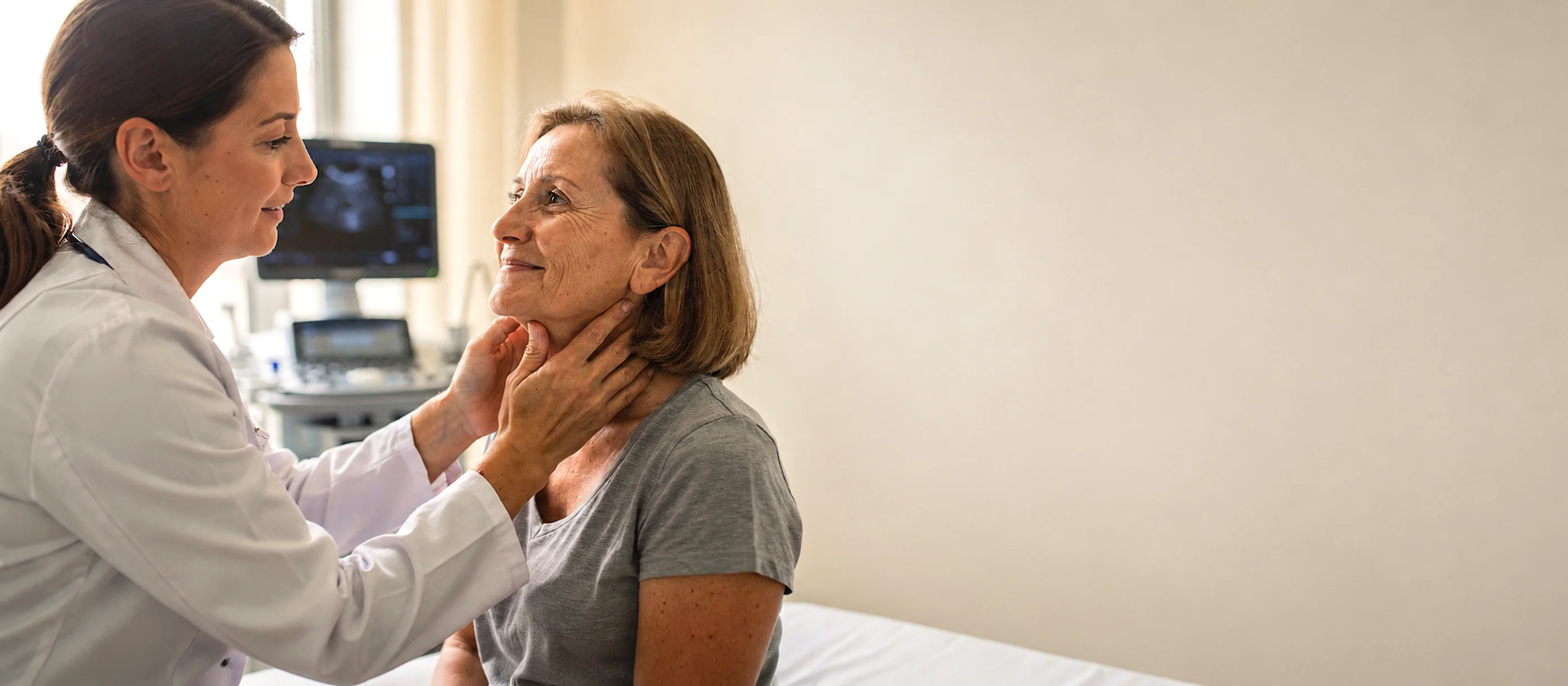
Microwave ablation, or MWA, is a minimally invasive treatment option for selected benign thyroid nodules. It uses a thin needle to treat the nodule without open surgery while helping preserve the thyroid gland.
Benefits of microwave ablation
No open surgery
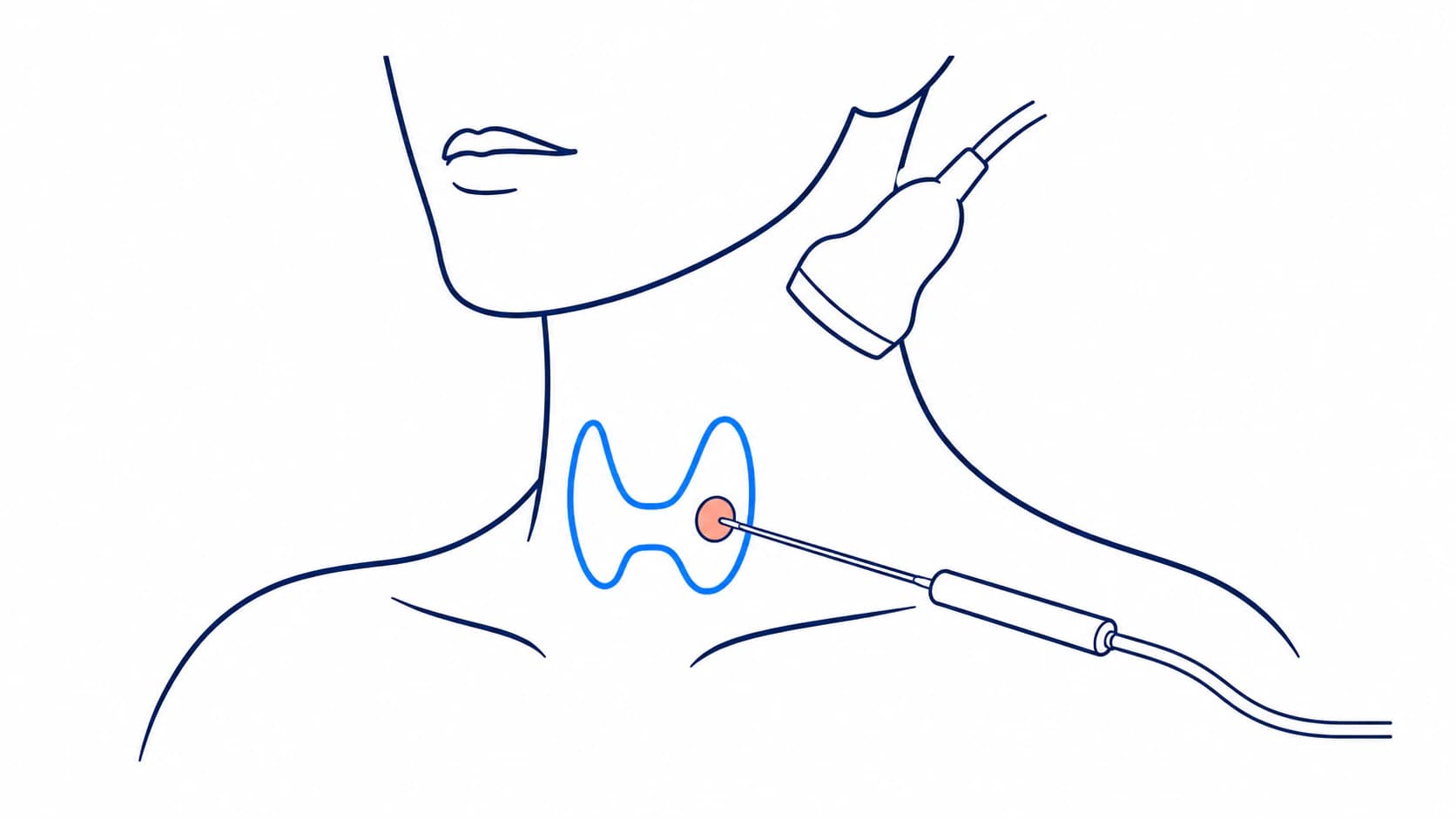
MWA uses a thin needle through the skin to treat the nodule, avoiding the open neck incision and surgical scar associated with thyroid surgery.1
Helps preserve thyroid tissue and function
MWA treats the nodule while aiming to preserve the rest of your thyroid. The vast majority of patients with normal thyroid function before treatment do not need to start thyroid hormone medicine afterward. Patients already taking medicine may need to continue.2
Convenient same-day care
MWA can be performed under local anesthesia, with or without sedation, in an outpatient setting. Many patients can go home the same day after monitoring.3,4
Substantial nodule shrinkage over time
Published studies have reported substantial nodule shrinkage over the months following MWA, with continued shrinkage over longer-term follow-up.5
Possible risks include pain, bruising or bleeding, swelling, skin burns, changes in thyroid function, and injury to nearby structures.3,6,8 Voice changes are often temporary but can be lasting.3 Less common problems include infection or rupture of the treated nodule.3 The nodule may not shrink enough or may grow again, and further ablation or surgery may be needed.3,5 Your doctor can explain what may apply to you.
MWA treats the nodule in 3 simple steps
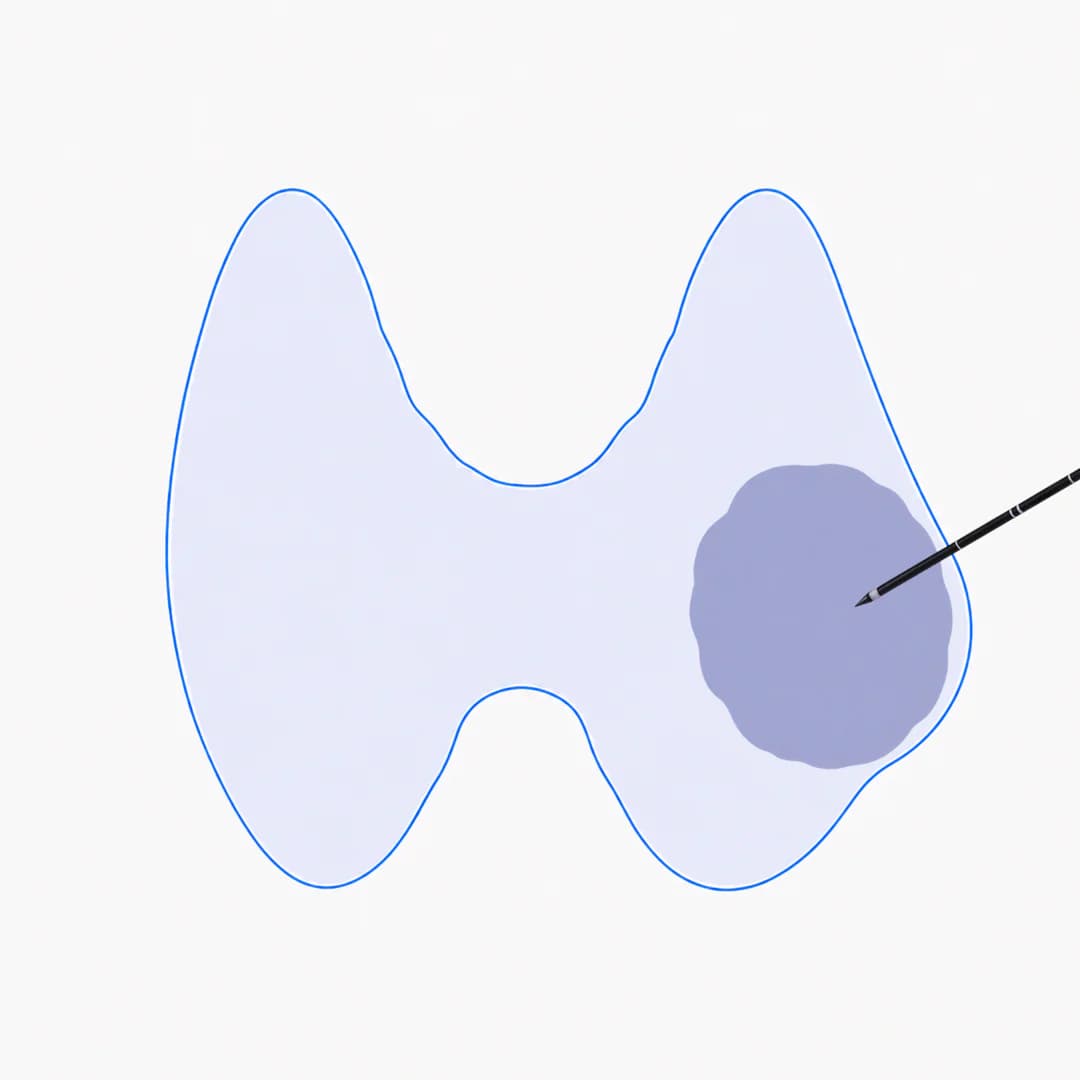
Your doctor locates the nodule
Your doctor uses ultrasound to guide a thin needle into the treatment area.6
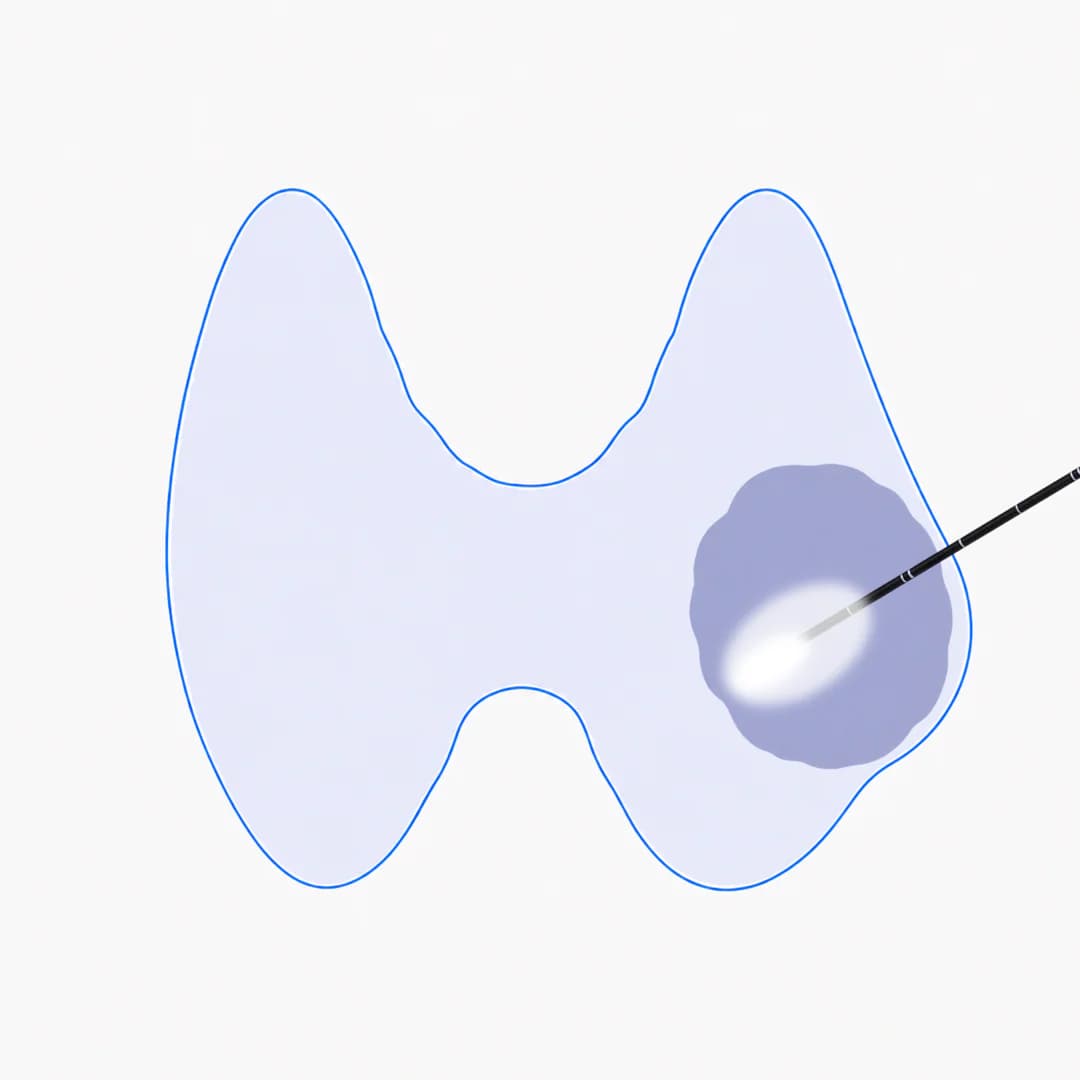
MWA treats it from within
A thin needle delivers microwave energy inside the nodule to create a controlled treatment zone.7
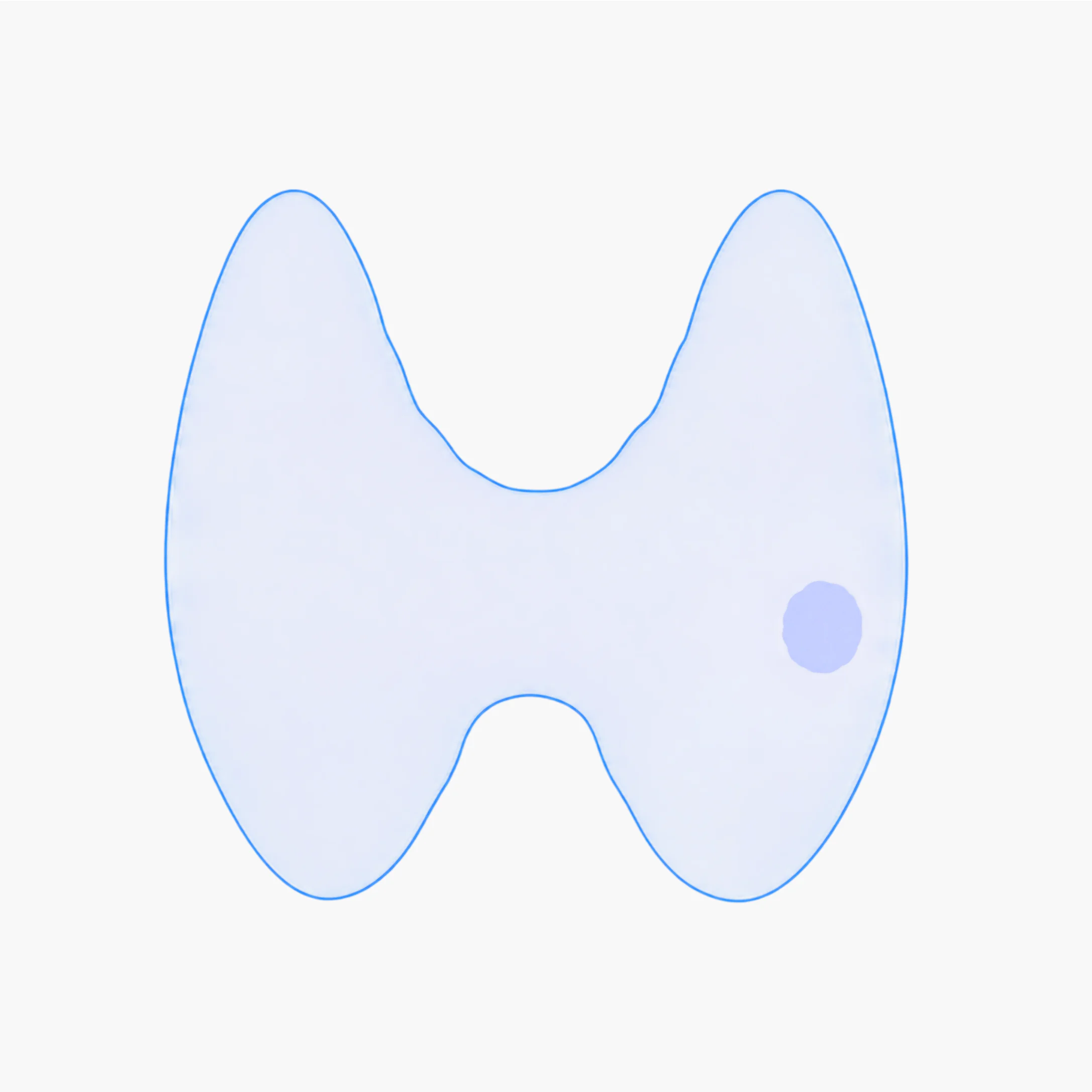
The nodule gradually shrinks
Over time, your body absorbs the treated tissue, and the nodule becomes smaller.5
Before, during, and after treatment
Your care team explains the treatment plan, the procedure itself, and the follow-up afterward.
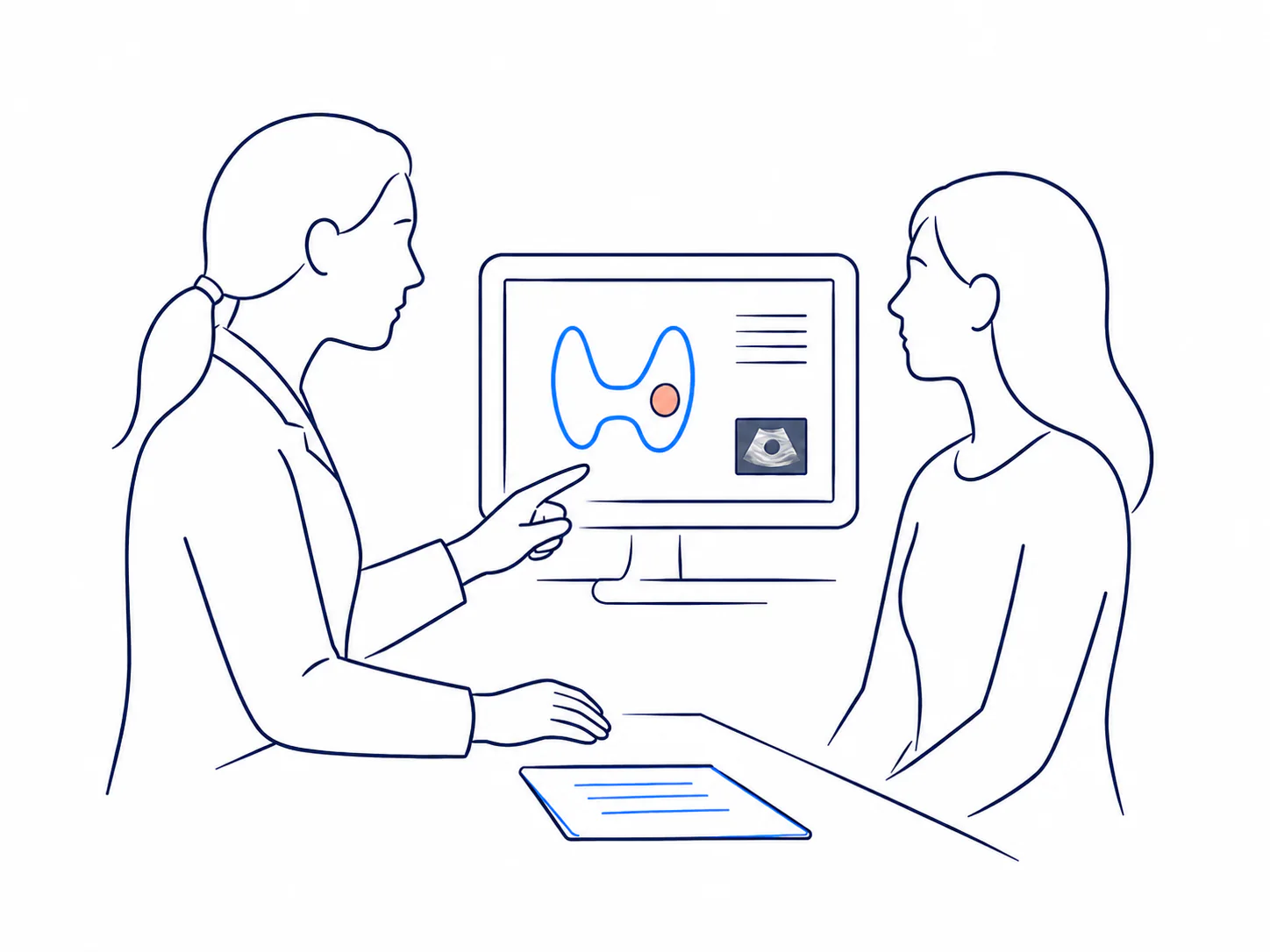
Before
Your care team reviews your imaging and biopsy information, confirms the treatment plan, and gives you instructions on how to prepare.
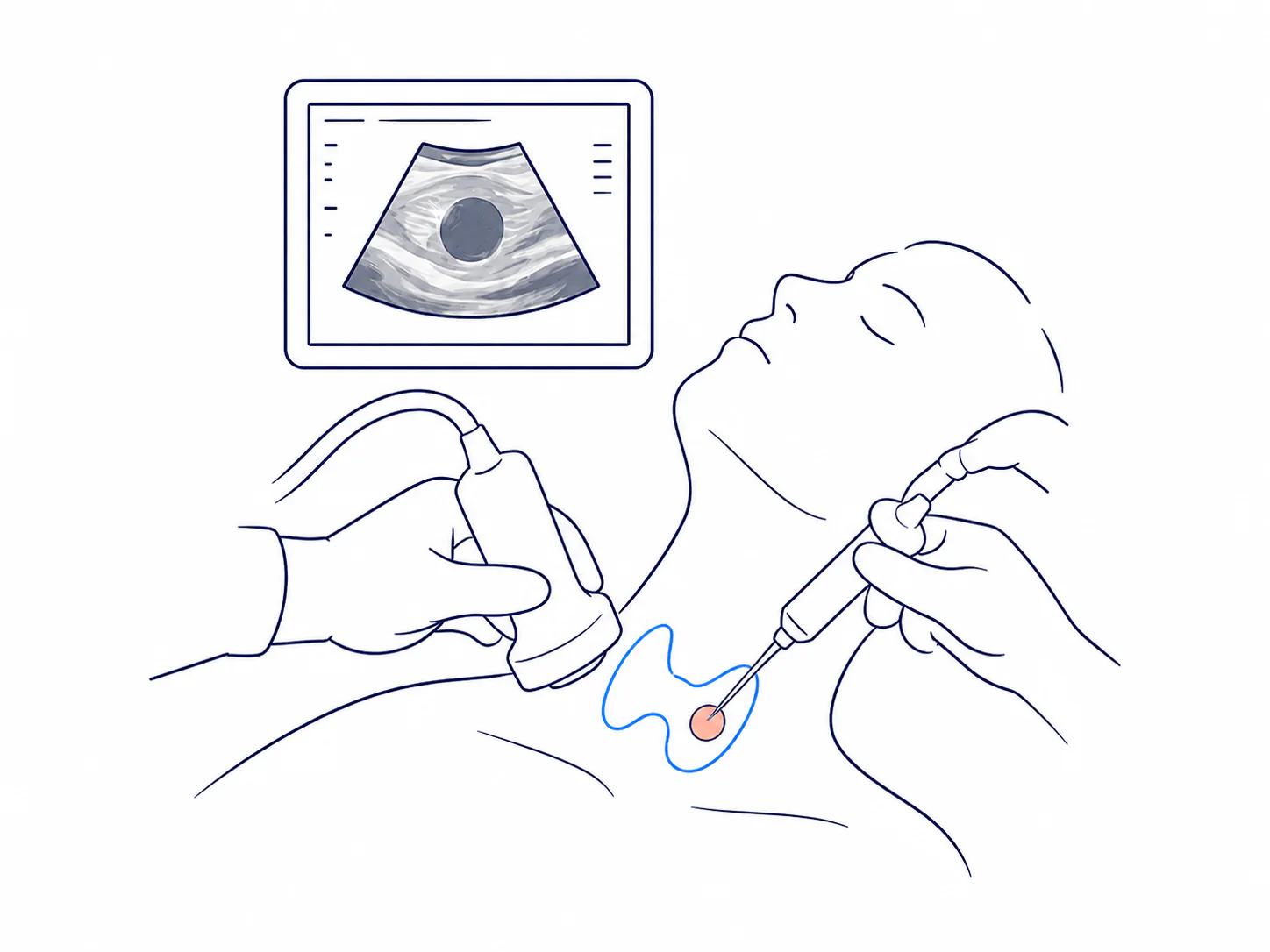
During
Your care team helps keep you comfortable and monitors you throughout the procedure. Under local anesthesia, with sedation if needed, your doctor uses ultrasound to guide a thin needle into the nodule.3,6
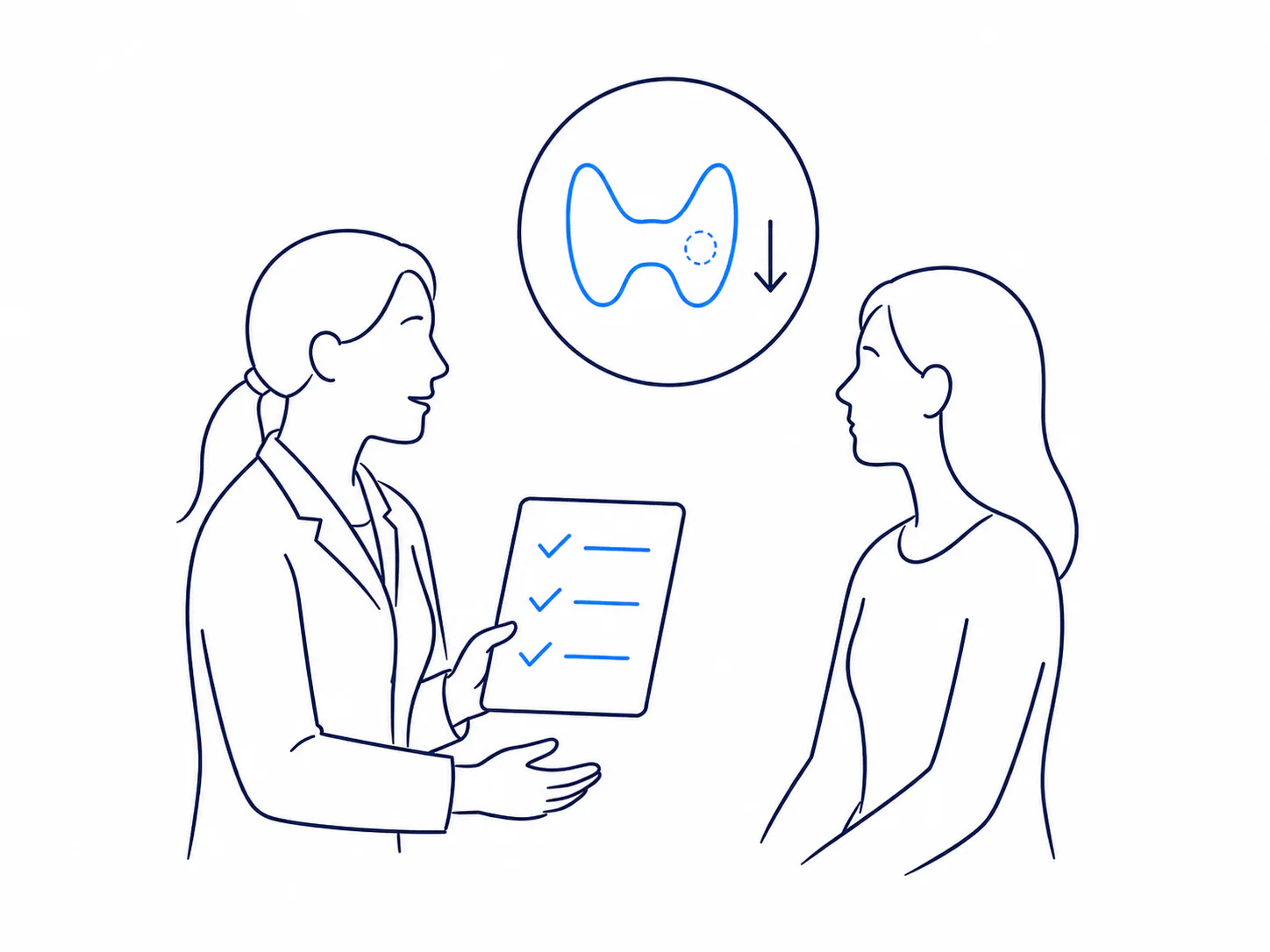
After
After a period of monitoring, many patients can go home the same day and receive instructions on recovery, symptoms to watch for, and follow-up imaging.3,4
Talk with your doctor about thyroid MWA
Prepare for your doctor visit
- 01
Zhi X, et al. Int J Hyperthermia. 2018;34(5):644–652.
- 02
Xiao W, et al. Front Endocrinol (Lausanne). 2026;17:1822597.
- 03
Sinclair CF, et al. Thyroid. 2023;33(10):1150–1170.
- 04
Fung MHM, et al. Eur Radiol. 2026;36(3):1783–1796.
- 05
Du JR, et al. Front Endocrinol (Lausanne). 2022;13:941137.
- 06
Liu YJ, et al. Exp Biol Med (Maywood). 2017;242(15):1515–1523.
- 07
Brace CL. Crit Rev Biomed Eng. 2010;38(1):65–78.
- 08
Wu W, et al. Endocr J. 2017;64(11):1079–1085.
Patient information note
Educational information only. This page does not provide medical advice and does not constitute a treatment recommendation. Patients should speak with a qualified healthcare provider about diagnosis, treatment options, risks, benefits, and alternatives relevant to their individual situation.